Normal (frame) camera
- • Captures full frames at a fixed rate, even when nothing changes.
- • Motion blur at speed, and struggles in low-light or high-contrast scenes.
- • Constant power and data even for an empty room — 720p30 is roughly 27 MB/s.
Neuromorphic vision
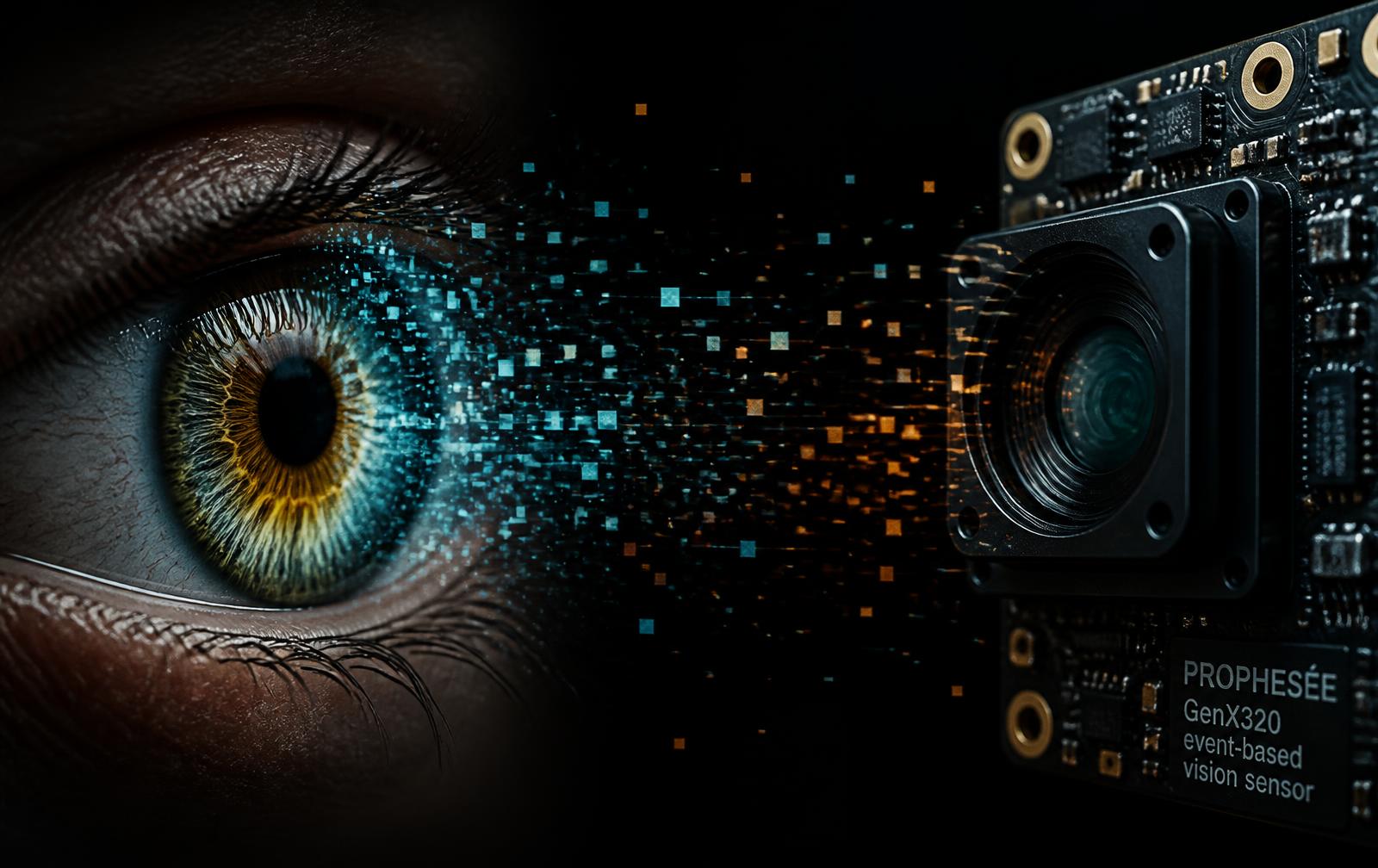
Your retina never sends a full picture to your brain. Each photoreceptor fires only when the light in front of it changes. An event-based camera copies that trick: microsecond response, no motion blur, and a tiny fraction of the power a normal camera burns.
10–100 mW
sensor power, vs 1–3.5 W for an industrial colour camera
< 1 ms
latency per event — like a virtual 1000+ fps camera
120–143 dB
dynamic range, vs ~60–70 dB on normal sensors
~0 data
bandwidth on a still scene, vs ~27 MB/s at 720p30
Even so, event cameras are complementary rather than a replacement: event data wins on motion and timing, frame data still wins on spatial and colour detail. And the retina is still far ahead — around 20 specialised ganglion cell types with rich spatial processing, against the single change-detection trick silicon copies today.
This site is built around a student presentation on event-based vision — slides included.
View the presentation